



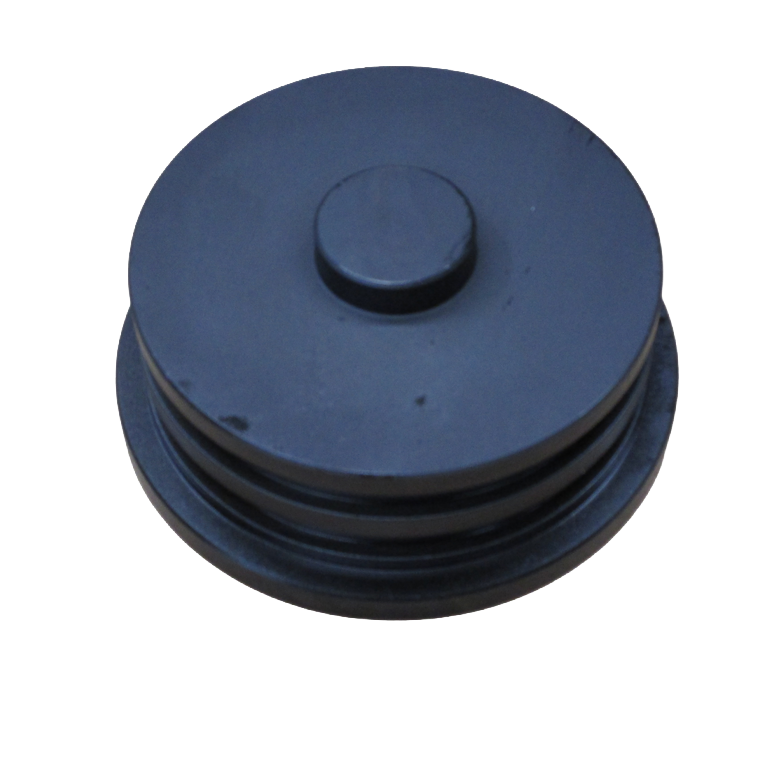
Product Introduction of the discharge cover
The discharge gland is an important structural accessory in the discharge valve area of the hydraulic end of a plunger pump. It is usually installed in the discharge valve cavity or at the discharge port position, used to seal the discharge valve cavity, position the relevant valve group parts, and together with the sealing ring, discharge cap and valve box, form a closed and fixed structure at the discharge end.
During the operation of a plunger pump, the reciprocating motion of the plunger causes periodic changes in the pressure inside the pump chamber. When the discharge valve is opened, high-pressure medium is discharged through the discharge channel. After the discharge valve is closed, the discharge valve cavity still needs to maintain a reliable structural seal. The discharge gland is installed in this high-pressure area, and its outer circle, end face and sealing groove need to fit correctly with the valve box and sealing parts.
The discharge cover itself mainly undertakes the functions of sealing the valve cavity, positioning the parts and installing and supporting the sealing components. The actual static seal is usually accomplished by O-rings, sealing rings, gaskets or other special sealing structures installed on the gland, while the discharge cap presses and fixes the discharge gland from the outside.
The main function of the discharge cover
1. Closed discharge valve cavity: Installed at the discharge port or the opening position of the discharge valve cavity, it structurally seals the valve cavity to prevent high-pressure medium from directly leaking out from the maintenance opening position.
2. Install the sealing parts at the discharge end: Sealing grooves are usually set on the outer circle of the cover or the corresponding parts for installing O-rings, sealing rings or other static sealing parts, and to form a sealing fit with the valve box.
3. Positioning of parts related to the discharge valve: Depending on the specific structure of the pump type, the discharge cover can form an axial positioning relationship with the valve spring, valve sleeve, guide piece or other valve group components to maintain the correct installation position of the discharge valve assembly.
4. Bearing the pressure at the discharge end: The discharge end belongs to the high-pressure area of the hydraulic end of the plunger pump. The gland needs to bear periodic pressure loads under the constraint of the cap or other fixed structures.
5. Facilitate valve group maintenance: After disassembling the discharge pressure cap and discharge pressure cover, the discharge valve, valve seat, spring and related guiding parts can be further inspected and replaced.
Installation location and working relationship
The discharge cover is usually located above the hydraulic end discharge valve assembly or at the discharge port. In a typical structure, the discharge gland is first installed into the discharge port, and the sealing ring is fitted into the corresponding sealing position of the gland. Then, it is axially fixed by the discharge cap, bolts or other holding structures.
The area below the discharge cover is connected to the discharge valve assembly. Different pump types may correspond to valve springs, valve sleeves, guide bushings or other parts. Therefore, the bottom structure of the discharge gland not only relates to the sealing but may also directly affect the positioning of the valve group parts and the installation space.
The difference from discharging the pressure cap
Discharge pressure covers and discharge pressure caps are usually used in combination, but they perform different functions.
The discharge cover is located on the inner side of the valve cavity and is mainly responsible for the sealing of the valve cavity, the installation of sealing parts, and the positioning of related valve components. The discharge pressure cap is located on the outside of the pressure cover and is mainly responsible for mechanically pressing and fixing the pressure cover.
Therefore, if leakage occurs at the discharge end, it is necessary to separately check the fixation status of the discharge pressure cover, the seal of the pressure cover, the sealing surface of the valve box and the discharge pressure cap. It cannot be simply judged that the pressure cap is loose.
Product features
Located in the high-pressure discharge area: It needs to adapt to the periodic high-pressure medium action at the discharge end of the plunger pump.
The sealing fit requirements are high: The outer circle of the gland, the size of the sealing groove and the installation hole of the valve box need to be correctly fitted; otherwise, it may affect the static sealing effect at the discharge end.
It has a positioning function: Depending on the specific structure, the discharge cover may simultaneously participate in the axial positioning of the valve spring, valve sleeve or guiding assembly.
Easy to disassemble and assemble the valve assembly: It adopts a detachable cover structure, which is convenient for inspecting and maintaining the discharge valve assembly.
Common failures and inspection sites
During maintenance, special attention should be paid to inspecting the outer circle of the discharge cover, the sealing groove, the compression end face, the contact position with the valve box, and the lower positioning structure. After long-term high-pressure use, these locations may experience erosion, corrosion, scratches, indentations or deformation.
If the sealing groove of the gland is damaged, leakage may occur even if a new sealing ring is replaced. If the compression end face is abnormally worn, it may affect the normal retention of the discharge pressure cap to the pressure cover.
For discharge gland covers with guiding or spring positioning functions, it is also necessary to simultaneously check whether there is obvious wear or skewing at the corresponding positioning parts.
Key points for selection
The discharge cover is a special part that directly matches the hydraulic end valve box. When purchasing, it is recommended to focus on confirming the following information:
1. Brand, series and specific model of plunger pump;
2. Hydraulic end or valve box model;
3. Discharge the outer diameter, total height and step size of the cover.
4. Position of the sealing groove, groove diameter and specifications of the sealing parts;
5. The mating structure with the discharge pressure cap;
6. The fit dimensions between the lower part and the valve spring, valve sleeve or guide parts;
7. Specifications of the discharge valve assembly;
8. Original part number, physical sample or technical drawing.
Installation and Maintenance
Before installation, the pressure cover, valve box installation holes and sealing grooves should be thoroughly cleaned and discharged. Check for burrs, rust, scratches and foreign objects. The sealing ring should be installed in the specified position to prevent twisting, cutting or squeezing during installation.
When the pressure cover is discharged and installed into the valve box, it should be kept in the correct direction and coaxial state. It is not advisable to assemble it by forcibly knocking. After installing the discharge pressure cap or other fixing parts, they should be tightened in accordance with the technical requirements of the corresponding pump type.
The discharge end of the plunger pump belongs to the high-pressure area. Before disassembling the discharge cap and discharge cover, it is necessary to complete the shutdown, pressure relief and medium isolation in accordance with the equipment operation procedures. Only after confirming that there is no residual pressure in the discharge pipeline and the hydraulic end can maintenance be carried out.
Procurement Instructions
Juli Petroleum Drilling and Production Equipment Co., Ltd. provides accessories related to discharge gland covers and hydraulic end discharge valves of plunger pumps. The discharge gland of different pump types may vary in outer diameter, sealing groove, step, compression structure and valve group positioning method. When purchasing, it is recommended to provide the model of the plunger pump, the model of the hydraulic end, the specification of the discharge valve, the original part number, physical dimensions or technical drawings to accurately verify the product.