


Product Introduction of Piston rod
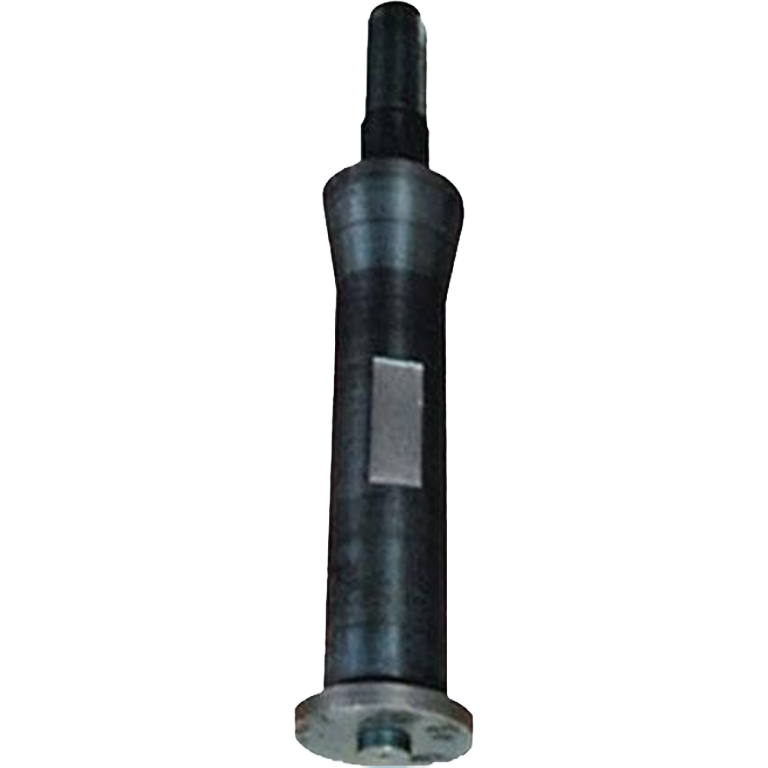
The piston rod is an important connecting component in the hydraulic end piston transmission system of the drilling mud pump, mainly used to connect the piston with the power end transmission mechanism. One end of the piston rod is in conjunction with the piston and its fastening structure, while the other end is usually connected to the intermediate pull rod, the crosshead extension rod or the corresponding transmission rod through the clamp assembly, transmitting the reciprocating motion generated at the power end to the piston.
When the mud pump is in operation, the piston rod drives the piston to continuously reciprocate inside the cylinder liner. When the piston moves in one direction, a corresponding suction process is formed. When it moves in the opposite direction, it pressurizes the drilling fluid in the working chamber and discharges it through the discharge valve. Therefore, the piston rod is a direct force-bearing part in the reciprocating transmission chain of the mud pump, and it continuously bears periodic tensile and compressive loads as well as reciprocating impacts during operation.
The key to a piston rod lies not only in the diameter and length of the rod body, but also in the piston installation end, the clamp connection end, the positioning step, the fastening structure and the related mating dimensions. Even if different models of mud pumps have similar appearances, they may not be interchangeable due to different end structures and lengths.
The main function of the piston rod
1. Transmission of reciprocating motion: The mechanical reciprocating motion transmitted from the crosshead and the intermediate pull rod is further transmitted to the piston, driving the piston to perform linear reciprocating motion inside the cylinder liner.
2. Transmitting axial working loads: During the suction and discharge processes of the mud pump, the piston rod bears axial tensile and compressive loads with constantly changing directions and is an important component for force transmission between the power end and the hydraulic end.
3. Maintain the piston installation position: The piston installation end should fit with the piston, piston rubber and related compression parts to keep the piston in the correct axial position on the piston rod.
4. Establish a detachable transmission connection: The other end of the piston rod is usually connected to the intermediate pull rod or the crosshead extension rod through a clamp assembly, which facilitates the disassembly of the transmission connection when replacing vulnerable parts such as pistons and cylinder liners.
The fit between the piston rod and the piston
The hydraulic end side of the piston rod is provided with an installation structure that cooperates with the piston. According to the specific design of the mud pump, the piston can be fixed on the piston rod through threads, positioning steps, fasteners and corresponding clamping structures.
After the piston is installed, it should maintain the correct axial position and center relationship to ensure that the piston can move stably back and forth along the center of the cylinder liner. If the positioning surface at the end of the piston rod, the thread or the piston installation structure is worn, it may cause the piston installation to become loose or the force state to be abnormal.
When purchasing piston rods, it is not only necessary to confirm the diameter of the matching cylinder liner, but also to verify the piston model, piston installation holes, rod end positioning dimensions and fastening structure.
The connection between the piston rod and the clamp assembly
The side of the piston rod close to the power end usually has a dedicated clamp connection structure. After being connected to the middle tie rod or the end of the crosshead extending out of the rod, the connection is completed through a two-half clamp assembly.
The internal forming groove of the clamp cooperates with the positioning structure at the end of the piston rod and the end of the other side rod, thereby maintaining the axial connection relationship of the two rods and transmitting reciprocating loads.
Therefore, the diameter of the piston rod clamp end, the shape of the groove, the width of the groove, the position of the step and the end face size are important selection parameters. Just because the diameters of the rods are the same, it cannot be determined that the two types of piston rods can be interchanged.
The force characteristics of the piston rod
When the mud pump is in operation, the piston rod continuously accelerates, decelerates and changes its direction of motion with each stroke, and at the same time bears the axial load formed by the pressure of the piston fluid. Therefore, it is a typical periodic reciprocating force-bearing part.
The normal operation of the piston rod requires that the transmission center maintain good alignment. If there is a significant deviation at the connection position of the piston rod, the middle tie rod, the clamp or the center of the cylinder liner, it is easy to generate additional lateral loads, which will accelerate the abnormal wear of the piston, cylinder liner and connection parts.
The difference from the middle pull rod and the large pull rod
Piston rod: Directly connected to the piston and moving back and forth together with it, it is responsible for transmitting mechanical motion and axial load to the piston.
Middle tie rod/crosshead extension rod: Located on the power end side, it transmits the reciprocating motion of the crosshead to the piston rod, and the two are usually connected by a clamp assembly.
The large pull rod: It is a structural connecting component between the hydraulic end and the power end of the mud pump. It mainly bears the connection of the body and the pre-tightening load. During normal operation, it does not move back and forth with the piston by itself.
Therefore, the piston rod, the large tie rod and the middle tie rod are different in terms of installation position, working mode and force-bearing function. When purchasing, the names cannot be mixed.
Common Failures and Inspections
When inspecting the piston rod, special attention should be paid to checking the rod body, the piston installation end, the clamp connection end, the positioning step, the thread and the force-bearing transition part.
Common abnormalities include bending of the rod body, surface corrosion or wear, wear at the connection end, indentation of the clamp groove, thread damage, deformation of the positioning end face, and cracks at the force-bearing transition position, etc.
If the piston shows abnormal uneven wear, the connection part of the clamp repeatedly loosens, or the cylinder liner is worn on one side, in addition to inspecting the piston and the clamp, it is also necessary to check whether the piston rod is bent, the end is worn, and the transmission center is misaligned.
Key points for selection
When purchasing piston rods for drilling mud pumps, it is recommended to focus on confirming the following information:
1. Brand, series and specific model of mud pump;
2. Hydraulic end and cylinder liner specifications;
3. Matching piston models;
4. Total length of the piston rod;
5. Diameter of the rod body and diameter of each section;
6. Structure and dimensions of the piston installation end;
7. The diameter, pitch and effective length of the piston end thread;
8. Piston positioning steps and end face dimensions;
9. Diameter and groove shape of the clamp connection end;
10. Width, depth and positioning dimensions of the clamp groove;
11. Model of the matching clamp assembly and intermediate tie rod;
12. Original part number, physical sample or technical drawing.
Installation and Maintenance
Before installation, the piston rod body, the piston installation end, the threads, the positioning end face and the clamp connection groove should be cleaned to check for any scratches, burrs, cracks or obvious deformations.
When installing the piston, it is necessary to confirm that the piston and the piston rod positioning structure are correctly matched. The fastening method and fastening requirements should be carried out in accordance with the corresponding mud pump maintenance data. It is not advisable to use a uniform empirical torque to replace the original equipment regulations.
When connecting with the middle tie rod, it is necessary to confirm that the ends of both sides of the rod are correctly aligned and the centers are consistent. Only after the inner groove of the clamp is fully fitted with the structure of the rod end should the clamp bolts be tightened.
After replacing the piston rod, the movement state of the piston in the cylinder liner and the transmission connection parts should be inspected. If any abnormal jamming, skewing or obvious radial runout is found, the piston rod, the middle tie rod, the clamp and the related installation center should be inspected. It is not advisable to continue forced operation.
Procurement Instructions
Juli Petroleum Drilling and Production Equipment Co., Ltd. provides piston rods and hydraulic end transmission accessories for drilling mud pumps. The piston rod is mainly used to connect the piston with the intermediate pull rod or the crosshead extension rod, and to undertake the reciprocating motion of the piston and the transmission of axial working loads. The piston rods of different mud pump models vary in total length, rod body diameter, piston installation end, clamp connection groove and thread structure. When purchasing, it is recommended to provide the mud pump model, piston model, clamp model, original part number, physical dimensions or technical drawings for matching verification.