


Product Introduction of Suction Plug Cap
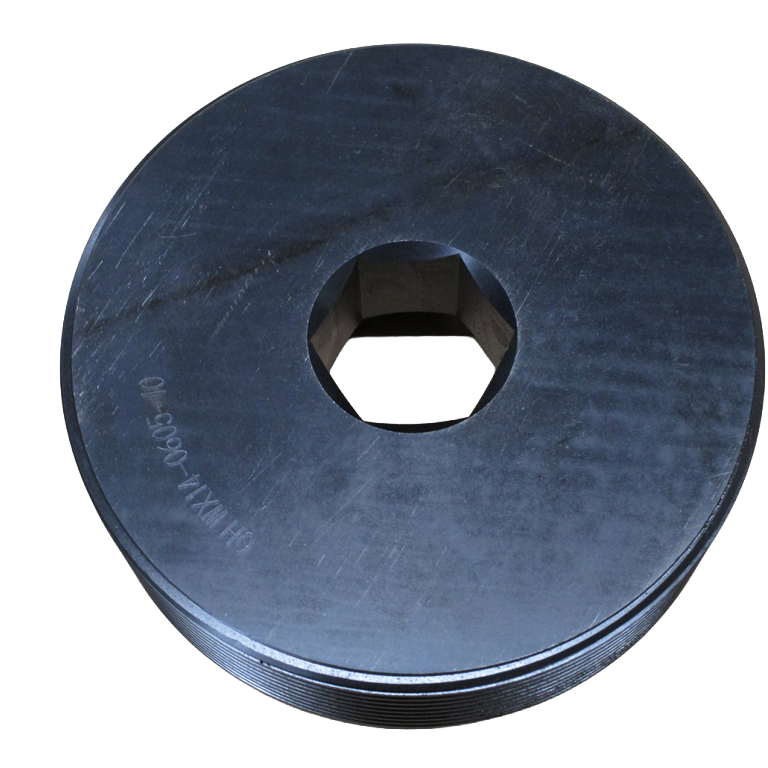
The suction plug cover is an important sealing accessory used on the suction side of the hydraulic end of a plunger pump. It is usually installed at the inspection hole of the suction valve, the suction side channel or the corresponding valve cavity opening position, to seal the working chamber of the hydraulic end and form a reliable sealing and fixing structure with the sealing ring, valve box and the outer compression part.
When a plunger pump is in operation, a periodic suction and pressurization process occurs inside the hydraulic end as the plunger reciprocates. The suction plug cover is located at the opening of the suction side connected to the working chamber. It needs to remain stable during the operation of the equipment to prevent the working medium from leaking out through the inspection hole or the opening of the valve chamber.
In the hydraulic end structure of some plunger pumps, the suction plug cover is installed in the inspection hole inside the valve box, and is then fixed on the outside through threaded gland, suction gland, cap or other holding structures. Therefore, the suction plug cover itself mainly undertakes the functions of blocking, pressure-bearing and sealing coordination, while the outer pressure cover is more responsible for axial holding and mechanical clamping.
The main function of the suction plug cap
1. Seal the inspection hole on the suction side: The suction plug cover is installed at the opening position on the suction side of the hydraulic end to seal the inspection hole or channel connected to the pump cavity, thus forming a complete pressure-bearing working space at the hydraulic end.
2. Cooperate with sealing parts to prevent medium leakage: The outer circle, end face or corresponding sealing groove of the plug cover is usually matched with D-rings, O-rings or other sealing parts to perform static sealing on the fit clearance between the plug cover and the valve box.
3. Withstand periodic pressure at the hydraulic end: As the plug cover is in communication with the working chamber, during the operation of the plunger pump, it will be subjected to pressure changes with the suction, compression and discharge processes. Therefore, its pressure-bearing end face, positioning structure and outer retaining structure need to be kept in good condition.
4. Form a valve assembly maintenance passage: After removing the external retaining parts and the suction plug cover, one can enter the suction valve area according to the specific hydraulic end structure to inspect or replace the suction valve, valve seat, valve spring and related components.
5. Maintain the working environment of the internal components of the hydraulic end: Correctly installed plug covers and seals can reduce the entry of external impurities into the valve chamber and keep the internal channels of the hydraulic end in a closed state.
Installation position and structural relationship
The suction plug cover is usually located at the inspection hole near the hydraulic end suction valve or at the end of the suction side channel. After the plug cover is installed into the valve box hole, its outer circle forms a positioning fit with the valve box. The sealing ring is located in the sealing groove of the outer circle of the plug cover or the corresponding sealing position of the valve box. The outside is then axially fixed by the cover, cap or other retaining parts.
The common structural relationship can be understood as: the inspection hole on the suction side of the valve box → the suction plug cover → the sealing ring → the outer cover or retaining part. The specific structural sequence may vary depending on the model of the plunger pump and the design of the hydraulic end. The original equipment structure should be taken as the standard.
The difference from an inhalation cap
The suction plug cover and the suction pressure cover belong to two different levels of parts in the structure of some plunger pumps.
Suction plug cover: Closer to the interior of the valve box and the working chamber, it is mainly responsible for sealing the inspection hole, withstanding the pressure inside the chamber and forming a static seal with the sealing ring.
Suction cover or cap: Usually located on the outside of the plug cover, it axially presses and holds the plug cover through threads or other fixed structures.
Therefore, during the procurement process, one cannot merely judge whether the parts are the same based on the word "cover". If a pump has both an intake plug cover and an intake pressure cover at the same time, the part number, installation position and size should be checked respectively.
Sealing and pressure-bearing characteristics
The suction plug cover is a static pressure-bearing component at the hydraulic end and does not perform reciprocating motion during normal operation. Its sealing effect mainly depends on the correct fit among the sealing surface of the plug cover, the mating holes of the valve box and the matching sealing rings.
For structures using D-type sealing rings or O-rings, after the sealing parts are assembled, they form a specified compression amount. Under the action of working pressure, they further adhere to the sealing surfaces of the plug cover and the valve box, thereby preventing the medium from leaking outward along the fit clearance.
Therefore, the outer circle dimensions of the suction plug cover, the sealing groove, the pressure-bearing end face and the positioning step all belong to important matching parts and cannot be approximately replaced merely based on the external dimensions.
Common failures and inspection sites
When inspecting the suction plug cover, special attention should be paid to checking the outer circle of the plug cover, the sealing groove, the pressure-bearing end face, the positioning step and the position in contact with the external pressure cover.
After long-term high-pressure operation, the surface of the plug cover may experience erosion, corrosion, indentation, scratches or local deformation. When the sealing groove is damaged, even if a new sealing ring is replaced, leakage may still occur.
If leakage occurs repeatedly on the suction side, the suction plug cover, sealing ring and the mating hole of the valve box should be inspected simultaneously. The sealing parts should not be replaced alone. When the sealing holes of the valve box are eroded or scratched, it will also affect the sealing effect of the new plug cover and the new sealing ring.
For the structure fixed by threaded gland on the outside, it is also necessary to check the contact position of the gland thread, the clamping end face and the plug cover to avoid unstable axial position of the plug cover due to abnormal retention structure.
Key points for selection
The suction plug cover is a special pressure-bearing component directly matched with the size of the hydraulic end valve box. When purchasing, it is recommended to focus on confirming the following information:
1. Brand, series and specific model of plunger pump;
2. Hydraulic end or valve box model;
3. The specific installation position of the suction plug cover;
4. Outer diameter and total height of the plug cover;
5. The mating diameter and length of the inserted valve box part;
6. Determine the diameter and position of the steps;
7. Diameter, width and position of the sealing groove;
8. Specifications of matching D-rings, O-rings or other sealing parts;
9. The matching structure of the outer cover or cap;
10. Original part number, physical sample or technical drawing.
Installation and Maintenance
Before installation, the suction plug cover, valve box installation holes and sealing grooves should be cleaned to ensure there is no sand, metal debris, old sealing materials or other foreign objects. Also, check if there are burrs or sharp edges on the sealing parts.
When installing a new sealing ring, it is necessary to confirm that the specification and installation position of the sealing ring are correct to avoid twisting, cutting or local squeezing. When the plug cover is installed into the valve box, it should be kept coaxial to avoid direct impact on the sealing parts.
The outer cover or fastener should be installed in accordance with the method specified for the corresponding pump type. The tightening torque, screw-in position and anti-loosening requirements should be based on the equipment maintenance manual or technical drawings.
The suction plug cover directly seals the pressure-bearing chamber at the hydraulic end. Before removing the plug cover, the machine must be stopped and the pressure thoroughly relieved. Only after confirming that there is no residual pressure in the suction pipeline, pump cavity and related channels can the external retaining parts and plug cover be removed.
Procurement Instructions
Juli Petroleum Drilling and Production Equipment Co., Ltd. provides suction plug covers and related accessories for the hydraulic end of plunger pumps. There may be significant differences in the outer diameter, length, positioning steps, sealing grooves, matching sealing parts and outer retaining structure of the suction plug covers of different pump types. When making a purchase, it is recommended to provide the pump model, hydraulic end model, original part number, physical dimensions or technical drawings to accurately verify the product.