


Introduction to Flange Seal products
Flange sealing is a static sealing accessory used in the pipeline, hydraulic end and related connection parts of the plunger pump. It is mainly installed between the two flange mating surfaces or between the flange and the connection seat, main pipe, joint and other parts, to close the connection gap and prevent the working medium from leaking from the flange mating part.
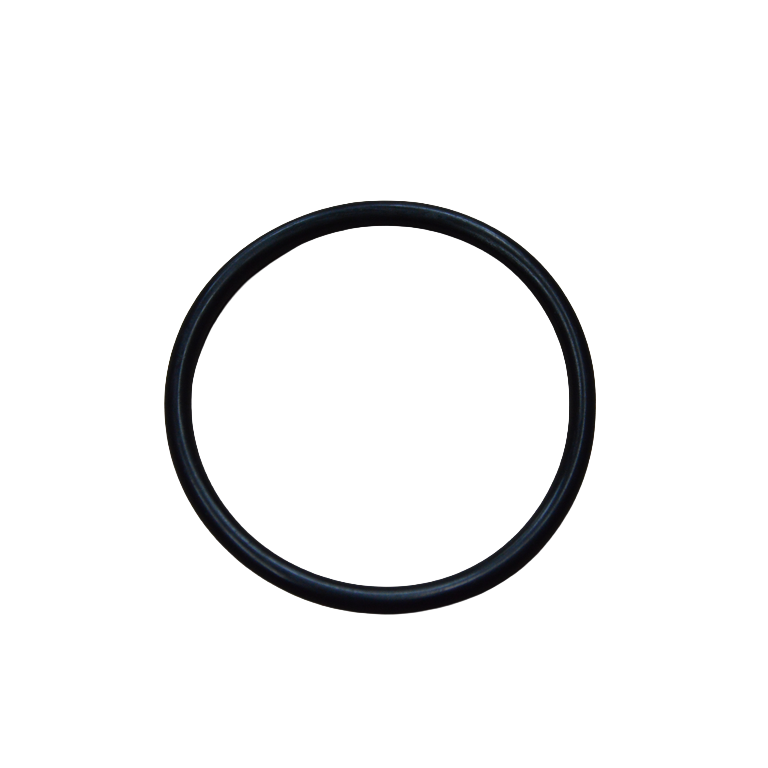
The flange connection structures at different positions of the plunger pump are not exactly the same. Flange sealing may adopt flat gaskets, O-rings, special-shaped sealing rings or other special sealing structures. Therefore, "flange sealing" cannot be selected merely based on the outer diameter of the flange. It is also necessary to verify it in combination with the sealing groove, sealing surface and the original design structure.
After the flange bolts or studs are tightened, the two flanges on both sides form a specified axial compression on the sealing element, allowing the sealing material to fully contact the flange sealing surface, thereby preventing the medium from leaking outward along the mating surface.
The main function of flange sealing
1. Sealing flange joint surface: Fill the tiny gap between the flange connection surfaces to form a stable static sealing interface.
2. Prevent leakage of working medium: At the connection positions of the suction, discharge or auxiliary pipelines of the plunger pump, restrict the leakage of medium along the flange connection side outward.
3. Compensating for minor surface errors: Elastic or compressible sealing materials can adapt to minor processing errors of the sealing surface within a certain range, but they cannot replace the repair of severely scratched, corroded or deformed flange surfaces.
4. Easy to disassemble and maintain: After disassembling the flange connection, the sealing parts can be inspected and replaced, which is convenient for the maintenance of the pipeline, main pipe and related components of the hydraulic end of the plunger pump.
Working principle
When assembling a flange connection, the preload of the bolts or studs is transmitted to the seal through the flange, causing the seal to undergo compression deformation in the thickness or cross-sectional direction, thereby creating an initial contact pressure between the flange sealing surfaces.
During the operation of the equipment, the sealing parts need to maintain sufficient contact pressure under the changes of medium pressure and temperature as well as the pre-tightening state of the connecting parts, in order to prevent the fluid from passing through the flange joint surface.
Therefore, the sealing performance of flanges not only depends on the material of the sealing parts, but also is related to whether the pre-tightening of bolts is uniform, the stiffness of the flange, the condition of the sealing surface, the size of the sealing groove and the installation alignment situation.
Common structural forms
The specific structure of the flange seal of the plunger pump should be based on the original equipment design. Common forms include flat gaskets, O-ring flange seals, special formed sealing rings and other matching sealing structures.
Flat sealing structure: The sealing element is located between the two flange sealing surfaces and forms a static seal through overall axial compression.
Sealing groove structure: Some flanges are processed with annular sealing grooves. O-rings or special sealing rings are installed in the grooves. Sealing is achieved through pre-compression and the action of medium pressure.
Different structures have different requirements for the thickness, cross-sectional shape and compression amount of seals. They should not be replaced merely based on similar inner and outer diameters.
The difference from flange spring gaskets
Flange sealing: Installed on the flange joint surface or in the sealing groove, its main function is to prevent medium leakage.
Flange spring gasket: Installed at the connection position of bolts and nuts, it is mainly used to assist in maintaining a tight state and prevent loosening.
Although the two may appear simultaneously in the same flange connection assembly, one is responsible for sealing and the other belongs to the fastening system, and their functions and selection parameters are completely different.
Inspection of the sealing surface and sealing groove of the flange
When replacing the flange seal, it is not only necessary to inspect the seal itself, but also to check whether there are scratches, erosion, corrosion, indentations, deformations or foreign matter residues on the sealing surfaces of both sides of the flange.
For structures with sealing grooves, special attention should be paid to inspecting the bottom, edge and fillet positions of the grooves to ensure there are no burrs, mechanical damage or severe corrosion.
If the flange surface or sealing groove has been damaged, repeated leakage may still occur even if a new seal is installed.
Common failure forms
After long-term operation, flange seals may encounter problems such as compression deformation, aging, hardening, cracking, erosion, extrusion, cutting or medium corrosion.
For flat sealing gaskets, there may also be uneven local compression, damage or edge erosion. For elastic sealing rings, attention should be paid to whether there is any squeezing damage, cross-sectional deformation or material expansion.
If the flange bolts are not pre-tightened evenly, it may also cause insufficient force on the sealing parts locally, resulting in leakage on one side first.
Key points for selection
When purchasing flange seals for plunger pumps, it is recommended to focus on confirming the following information:
1. Brand, model and specific installation location of the plunger pump;
2. Flange specifications and connection forms;
3. Types of sealing structure;
4. Inner and outer diameters of the sealing parts;
5. Thickness or cross-sectional dimensions of the sealing parts;
6. Whether a sealing groove structure is adopted;
7. Diameter, width and depth of the sealing groove;
8. Working medium, pressure and temperature;
9. Requirements for sealing materials and hardness or compression performance;
10. Original part number, physical sample or technical drawing.
Installation and Maintenance
Before installation, the flange sealing surface and sealing groove should be thoroughly cleaned to remove old sealing materials, rust and other impurities.
The sealing parts should be correctly placed at the center of the flange or in the dedicated sealing groove to avoid being skewed, folded, twisted or partially jammed by the bolt holes.
Multi-bolt flange connections should be uniformly tightened in a cross and step-by-step manner in accordance with the requirements of the corresponding equipment to avoid excessive compression of the seal on one side. The final tightening torque should be carried out in accordance with the specific technical requirements of the flange, bolts and equipment.
For gaskets or seals that are specified for single use, after the flange is disassembled, they should be replaced in accordance with the original equipment maintenance requirements. They should not be reused repeatedly just because their appearance is temporarily intact.
Before disassembling the pressure-bearing flange of the plunger pump, the machine must be shut down, isolated and completely depressurized in accordance with the equipment operation procedures.
Procurement Instructions
Juli Petroleum Drilling and Production Equipment Co., Ltd. provides flange seals and static seal accessories for plunger pumps. Flange seals used in different pump types and installation positions may vary in structural form, inner and outer diameters, thickness, cross-section, sealing grooves and materials. When making a purchase, it is recommended to provide the pump model, flange installation position, sealing dimensions, original part number, physical samples or technical drawings to accurately verify the product.