


Product Introduction of Sealing Gaskets
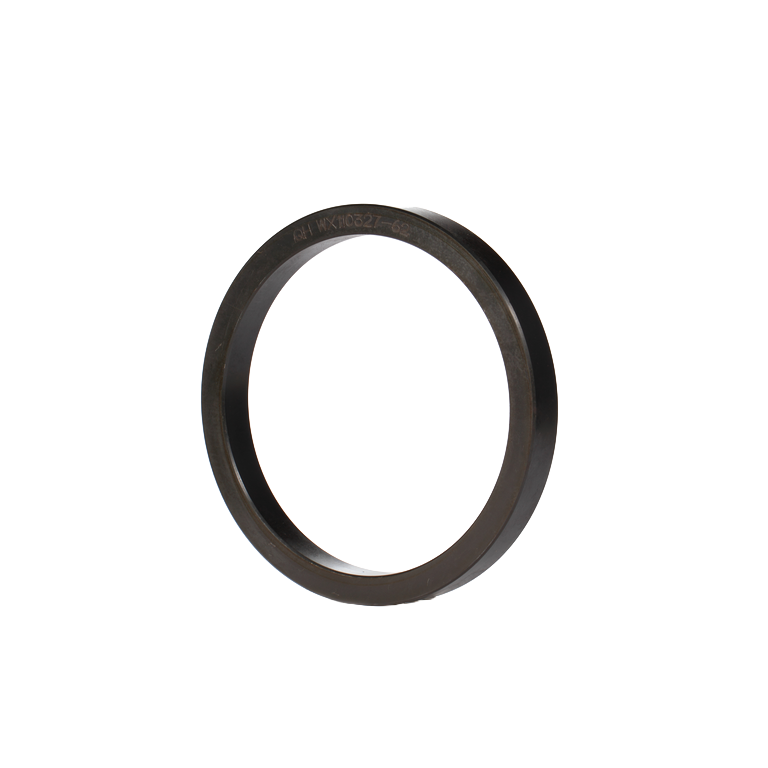
Sealing gaskets are commonly used static sealing accessories at the connection parts of plunger pumps. They are usually installed between the end faces, step surfaces or connection mating surfaces of two relatively stationary parts. They form a seal through the axial compression effect generated during assembly, which is used to prevent the working medium, lubricating oil or other fluids from leaking along the mating surfaces of the parts.
Unlike ordinary flat washers, the main task of sealing washers is not to distribute the load on bolts, but to form continuous and effective sealing contact in the specified sealing area. Therefore, its inner diameter, outer diameter, thickness, material and the fit state with the sealing surface all need to be selected according to the specific installation location.
The sealing gaskets used in different models and installation positions of plunger pumps may be non-metallic, metallic or of a combined structure. In the absence of the original part number or technical drawings, it is not advisable to uniformly stipulate specific materials, hardness or thickness.
The main function of the sealing gasket
1. Sealing the stationary mating surface: The sealing gasket is installed between two stationary parts to seal the gap of the mating surface, forming a static seal.
2. Prevent medium leakage: At the hydraulic end, joint, plug cover, pressure cover, pipe interface or other matching connection positions, prevent the medium from leaking outward along the end face or connection gap.
3. Adapt to minor errors of the sealing surface: For sealing gaskets with certain compressive or plastic deformation capabilities, after assembly and compression, it can fill the micro-unevenness of the sealing surface within a certain range, improving the sealing effect of the mating surface.
4. Form a maintainable sealing interface: When the equipment is disassembled for maintenance, the sealing gaskets and their contact surfaces can be inspected, and the sealing parts can be replaced according to the original equipment requirements.
Working principle
Sealing gaskets usually operate by relying on the axial clamping force generated by the connecting parts. When the nut, bolt, cover or other clamping parts are assembled, the sealing gasket is pressed between the two sealing surfaces, thereby generating sufficient sealing contact pressure.
The effective sealing of a sealing gasket not only depends on the material itself, but is also related to the thickness of the gasket, the effective sealing width, the degree of compression, the roughness or damage condition of the sealing surface, and the pressure of the working medium.
If the compression is insufficient, leakage may occur at the joint surface. If the sealing structure is overly compressed, certain types of gaskets may undergo excessive deformation, extrusion or damage. Therefore, installation should be carried out in accordance with the original equipment structure and assembly requirements.
Common installation locations
The sealing gaskets in the plunger pump can be applied to joints, plug covers, pressure covers, end covers, pipe interfaces and other positions that require static sealing at the end face according to the equipment design.
The same plunger pump may use a variety of sealing gaskets of different sizes and structures. Therefore, when purchasing, it is necessary to clearly define the specific installation position of the gasket and verify the two parts in contact with it and their original part numbers.
The difference from ordinary gaskets
Sealing gasket: Its main function is to seal the gap at the joint surface around the medium channel to prevent fluid leakage. Its size, material and compression state are directly related to the sealing effect.
Ordinary flat gasket: Mainly used under bolts or nuts, it is used to disperse pressure, protect the connection surface or cooperate with the fastening structure, and generally does not undertake the main medium sealing function.
Spring washer: It is an auxiliary anti-loosening part in the fastening system and its function is more different from that of the sealing washer.
Therefore, just because the shapes are all ring-shaped, ordinary flat washers or spring washers cannot be used to replace special sealing washers.
The difference from O-rings
O-rings typically feature a circular elastic cross-section and are installed in sealing grooves that match their dimensions. They form seals through cross-sectional compression and elastic deformation.
Sealing gaskets place more emphasis on the axial clamping seal between the two end faces. Common structures include annular gaskets or special formed gaskets. The installation slots, compression methods and size parameters required by the two are different, and they cannot be directly replaced just because their inner diameters are similar.
Sealing surface inspection
When replacing the sealing gasket, both the upper and lower sealing contact surfaces should be inspected simultaneously. If there are obvious scratches, erosion, corrosion, pits, burrs or local deformations on the sealing surface, leakage may continue to occur even if a new sealing gasket is installed.
For structures with positioning steps or sealing grooves, it is also necessary to check whether the step depth, groove edges and positioning surfaces are damaged to prevent eccentricity, edge clamping or uneven compression after the gasket is installed.
Common failure forms
Common abnormalities of sealing gaskets include compression deformation, local crushing, cracks, edge damage, extrusion, erosion, corrosion, and material performance degradation caused by medium action.
If the gasket is subjected to uneven force, it may also result in excessive compression on one side and insufficient sealing specific pressure on the other side, eventually leading to local leakage.
For sealing gaskets that have undergone obvious plastic deformation after disassembly or are originally specified for one-time use in the equipment, they should be replaced in accordance with maintenance requirements. It is not advisable to simply flip them over and continue to use them.
Key points for selection
When purchasing sealing gaskets for plunger pumps, it is recommended to focus on confirming the following information:
1. Brand, model and specific installation location of the plunger pump;
2. Two parts that cooperate with the sealing gasket;
3. Inner diameter of the washer;
4. Outer diameter of the washer;
5. Gasket thickness;
6. Cross-section or end face structure;
7. Dimensions of positioning steps or sealing grooves;
8. Working medium, pressure and temperature conditions;
9. Original design materials and sealing requirements;
10. Original part number, physical sample or technical drawing.
Installation and Maintenance
Before installation, the sealing contact surface should be thoroughly cleaned to remove old sealing materials, metal debris, rust and other impurities, and it should be confirmed that there is no obvious damage to the sealing surface that affects the sealing.
The sealing gasket should be correctly concentric with the installation position and must not be skewed, folded, have edges clamped or be partially suspended. For sealing gaskets with front and back sides, steps or special cross-sections, the installation direction should be confirmed according to the original structure.
For connection parts that are tightened by multiple bolts or studs, they should be tightened step by step and evenly as required by the equipment to prevent the sealing gasket from deforming unevenly due to excessive local load.
Before disassembling and assembling the hydraulic end and other pressure-bearing positions, the machine should be shut down, isolated and completely depressurized in accordance with the equipment operation procedures.
Procurement Instructions
Juli Petroleum Drilling and Production Equipment Co., Ltd. provides sealing gaskets and static sealing accessories for plunger pumps. Sealing gaskets used in different installation positions may have significant differences in inner diameter, outer diameter, thickness, cross-sectional structure, material and sealing method. When purchasing, it is recommended to provide the pump model, installation position, sealing gasket size, original part number, physical samples or technical drawings to accurately verify the product.