


Product Introduction of O-Ring Seals
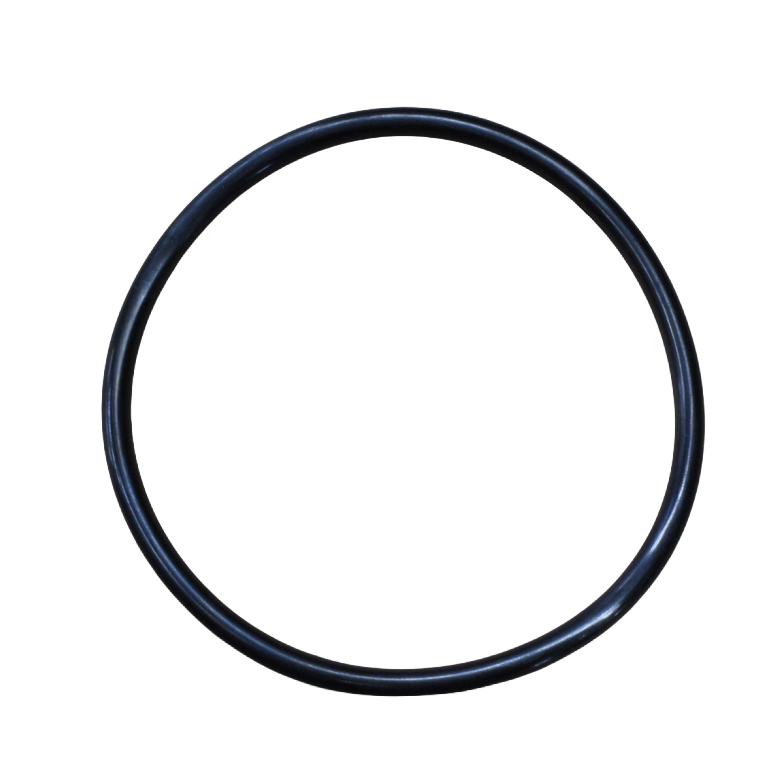
O-rings are commonly used elastic sealing components in the hydraulic end, power end and auxiliary connection parts of plunger pumps. Their cross-sections are usually circular and they are installed in the pre-processed sealing grooves of parts to prevent the working medium, lubricating oil or other fluids from leaking from the fit clearance.
In the structure of plunger pumps, O-rings can be applied to gland covers, plug covers, valve boxes, flanges, joints, oil seal seats and other static mating parts according to the specific pump type. The dimensions, materials, hardness and sealing groove structures of different installation positions may vary, so they cannot be replaced merely based on their similar appearance.
O-rings mainly rely on pre-compression after assembly to form an initial seal. When there is medium pressure inside the system, the elastic body will undergo controlled deformation in the sealing groove and the fit clearance, increasing the sealing contact pressure and thus maintaining the sealing state of the connection part.
The main function of O-rings
1. Static joint surface sealing: It is used for sealing between two relatively stationary parts, such as the gland and valve box, the plug cover and the installation hole, the flange and the connecting seat, etc.
2. Prevent medium leakage: By means of the contact between the O-ring and the sealing groove as well as the mating surface, the leakage of the pumped medium or lubricating oil along the gap of the parts is prevented.
3. Isolating different cavities: In some structures, O-rings are also used to isolate different pressure areas or lubrication areas to prevent the media from communicating with each other.
4. Easy to maintain and replace: O-rings are replaceable sealing elements. After disassembling and maintaining components such as the gland and the plug cover, they can be inspected and replaced according to the original specifications.
Working principle
After the O-ring is installed in the sealing groove, its circular cross-section will be compressed to a certain extent during the assembly process, thereby forming an initial contact pressure between the sealing surfaces.
When the medium pressure acts on one side of the O-ring, the O-ring will undergo elastic deformation towards the low-pressure side and the sealing gap, making it fit the sealing surface more closely and thus forming a pressure-assisted sealing effect.
Therefore, the sealing effect of O-rings not only depends on the sealing rings themselves, but is also closely related to the width and depth of the grooves, the compression amount, the fit clearance, the surface condition and the hardness of the material.
Common installation locations
O-rings in plunger pumps can be found in multiple locations, commonly including the hydraulic end valve box cover, suction or discharge plug cover, threaded cover, sensor joint, flange connection, oil seal seat and other static sealing mating surfaces.
Due to the different internal structures of various pump types, multiple O-rings of different sizes are often used on the same plunger pump. Therefore, when purchasing, the specific installation location and the original part number should be clearly defined. Do not just write "O-ring" while ignoring the size and application.
The difference from D-type sealing rings
Both O-rings and D-rings are elastic sealing parts, but their cross-sections and groove designs are different.
O-ring seal: Its cross-section is usually circular, and it achieves sealing through the compression and elastic deformation of the circular cross-section.
D-type sealing ring: The cross-section usually has a relatively obvious combination structure of plane and arc. Its installation groove and compression method are different from those of O-rings.
Therefore, even if the inner diameters of the two types of sealing rings are close, they cannot be directly interchanged merely based on the diameter. It is necessary to simultaneously verify the cross-sectional shape and the structure of the sealing groove.
The difference from plunger packing
O-rings are mainly used for sealing at static or low-motion mating parts, while the plunger packing directly contacts the reciprocating surface of the plunger and is a dynamic sealing element at the plunger end.
The two are different in structure, installation position, force application mode and wear form. O-rings cannot be selected according to the usage method of plunger packing.
High-pressure working conditions cooperate with the retaining ring
When the O-ring is subjected to high pressure and the fit clearance is large, the elastomer may be squeezed into the clearance, resulting in crush, edge cutting or local tearing.
Some plunger pump structures are equipped with retaining rings or anti-extrusion rings on the low-pressure side of the O-ring to restrict the O-ring from entering the fit clearance. Whether a retaining ring is needed, the number of retaining rings and the installation direction should be determined according to the specific sealing structure and the original equipment design.
Common failure forms
After long-term use, O-rings may encounter problems such as compression deformation, hardening, aging, cracking, wear, extrusion, cutting, surface expansion or material softening.
If the sealing ring is squeezed into the fit clearance by high-pressure medium, the edge may have notches or be gnawed. If the assembly process passes through sharp threads, burrs or steps, scratches may occur during installation.
If there is still leakage after replacing the new O-ring, continue to check whether there are scratches, corrosion, deformation or dimensional abnormalities in the sealing groove, mating hole, outer circle of the gland, sealing surface and mating clearance.
Material selection
The material of O-rings needs to be matched according to the working medium, temperature and pressure conditions. Different elastomers have different resistance capabilities to oil products, water-based media, chemical media and high-temperature environments.
When purchasing plunger pump parts, it is not recommended to judge the material only by color, as the color of the sealing ring cannot reliably represent the specific type or hardness of the elastomer. The material grade and hardness should be determined preferentially based on the original part requirements, technical drawings or equipment maintenance data.
Key points for selection
When purchasing O-ring seals for plunger pumps, it is recommended to focus on confirming the following information
1. Brand, model and hydraulic or power end model of the plunger pump;
2. Specific installation position of the O-ring;
3. Inner diameter of the sealing ring;
4. Cross-sectional diameter, also known as wire diameter;
5. Diameter, width and depth of the sealing groove;
6. Working medium;
7. Working pressure and temperature range;
8. Requirements for elastomer materials and hardness;
9. Whether it is equipped with a retaining ring or an anti-extrusion ring;
10. Original part number, physical sample or technical drawing.
Installation and Inspection
Before installing the O-ring, the sealing groove should be cleaned and checked for burrs, rust, metal debris and mechanical damage at the bottom and edge of the groove.
During the installation process of O-rings, excessive stretching, twisting and scratching should be avoided. If the sealing ring needs to pass through threads, keyways or sharp steps, appropriate protective measures should be taken to prevent the sealing lip from being cut.
After assembly, it should be confirmed that the O-ring is completely located in the sealing groove, and there should be no edge clamping, flipping or local protrusion. For structures with retaining rings, it is necessary to simultaneously confirm that the positions and installation relationships of the O-rings and retaining rings are correct.
The hydraulic end of the plunger pump belongs to the pressure zone. Before disassembling the gland, plug cover or other pressure-bearing components containing O-rings, the machine should be shut down in accordance with the equipment operation procedures and the pressure should be completely released.
Procurement Instructions
Juli Petroleum Drilling and Production Equipment Co., Ltd. provides O-rings and piston pump sealing accessories. O-rings used in different installation positions may vary in inner diameter, wire diameter, material, hardness, sealing groove size and working conditions. When purchasing, it is recommended to provide the pump model, specific installation location, O-ring size, sealing groove size, original part number, physical samples or technical drawings to accurately verify the product.