


Product Introduction of Cylinder Head flange
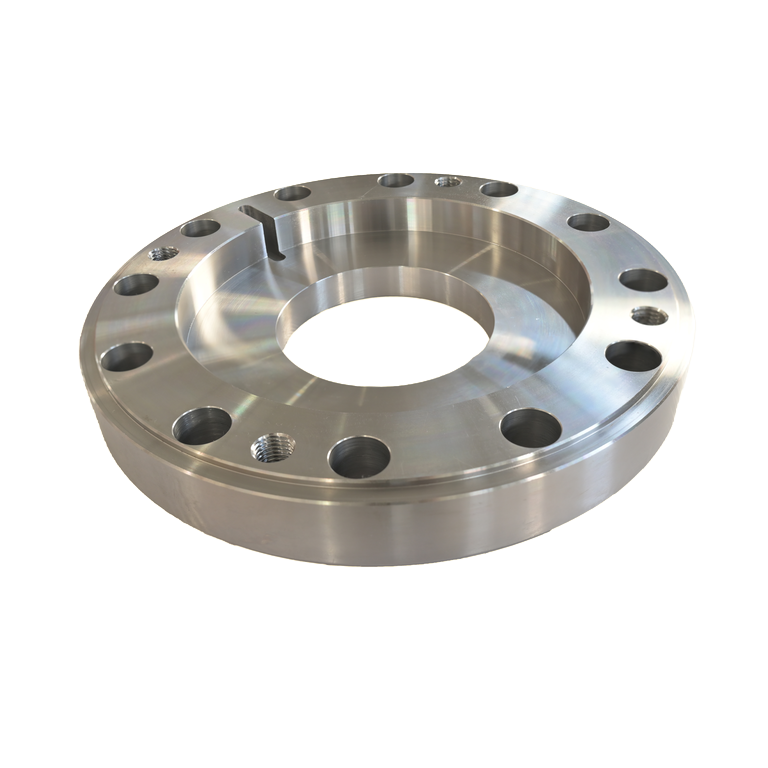
The cylinder head flange is a rigid structural accessory in the hydraulic end cylinder head installation system of the drilling mud pump. It is mainly installed at the corresponding position of the cylinder head opening of the hydraulic cylinder, providing an installation foundation for the cylinder head and its clamping and locking structures, and transmitting the axial pressure load on the cylinder head to the hydraulic cylinder or the corresponding load-bearing structure.
During the operation of the mud pump, the piston reciprocates within the cylinder liner, and the pressure in the working chamber at the hydraulic end changes periodically. When the working chamber is in a high-pressure state, the internal pressure acts on the cylinder head and forms an outward axial load. The cylinder head flange needs to maintain a reliable mechanical fit with the cylinder head and its locking structure to keep the cylinder head stably in the designed installation position.
The cylinder head flange is a metal load-bearing and positioning component and is usually not a major elastic sealing element by itself. The medium seal at the cylinder head position is mainly accomplished by the cylinder head sealing ring and the corresponding sealing cavity. Therefore, although the cylinder head flange, cylinder head and cylinder head sealing ring belong to the same installation system, the functions they undertake are different.
The main function of the cylinder head flange
1. Establish the cylinder head installation foundation: The cylinder head flange forms a stable connection with the hydraulic cylinder through the center hole, positioning stop mouth, installation end face and fixed structure, providing a specified installation position for the cylinder head system.
2. Supporting cylinder head locking structure: According to the design of the mud pump, the cylinder head flange can be combined with the cylinder head clamping part, locking part or other special fixing structures to reliably hold the cylinder head at the end of the liquid cylinder.
3. Transmitting axial pressure load: The internal pressure of the working chamber acts on the cylinder head, generating an axial force. The cylinder head flange and related locking structures need to transfer this load to the hydraulic cylinder to maintain the mechanical stability of the entire cylinder head system.
4. Maintain the center and installation position of the cylinder head: Through the center hole, stop mouth and end face positioning, keep the correct geometric relationship among the cylinder head, hydraulic cylinder and locking parts, and avoid obvious eccentricity or oblique installation.
The load-bearing relationship of the cylinder head system
After the mud pump enters the discharge stroke, the pressure in the hydraulic end working chamber rises, and the cylinder head is subjected to an axial force generated by the internal medium pressure. The cylinder head body bears pressure and transmits the load to the external locking structure, while the cylinder head flange provides the corresponding load-bearing capacity and installation foundation for the locking structure.
Therefore, the load-bearing end face of the cylinder head flange, the positioning stop mouth, the installation holes, and the parts that cooperate with the locking components all belong to important structural areas. If these parts suffer from severe wear, indentations or deformation, it may affect the axial positioning and force state of the cylinder head.
The difference from the cylinder head
Cylinder head: It is a rigid pressure-bearing component that directly seals the opening at the end of the working chamber of the liquid cylinder, with the inner side facing the pressure of the working medium.
Cylinder head flange: It is a fixed, positioning and load-bearing basic component in the cylinder head installation system, mainly responsible for the installation of the cylinder head, the support of the locking structure and the load transmission.
The two usually work in conjunction, but they cannot be purchased as the same type of parts merely because they are both located at the end of the liquid cylinder. When selecting the model, the size of the cylinder head and the installation size of the cylinder head flange should be checked separately.
The difference from the cylinder head sealing ring
Cylinder head flange: It is a rigid metal structural component, mainly responsible for installation, positioning, support and load-bearing.
Cylinder head sealing ring: It belongs to elastic static sealing parts, mainly sealing the medium leakage channel between the cylinder head and the hydraulic cylinder.
The cylinder head flange cannot replace the elastic sealing function of the cylinder head sealing ring. If leakage occurs at the cylinder head position, special attention should be paid to inspecting the cylinder head sealing ring, the cylinder head sealing surface and the liquid cylinder sealing cavity. At the same time, check whether there is any deformation or abnormal positioning in the cylinder head flange and locking structure.
Center hole and positioning stop mouth
The center hole of the cylinder head flange and the positioning stop mouth are the structural dimensions that need to be carefully checked during the selection process. The center hole needs to provide the correct installation space for the cylinder head and related locking structures, while the positioning stop is used to maintain the central relationship between the flange and the hydraulic cylinder.
When making a purchase, only the outer diameter of the flange should be confirmed. The diameter of the center hole, the internal steps, the diameter of the positioning stop, the height of the stop and the total thickness of the flange should also be checked. Even if the outer diameters and the number of installation holes of the two flanges are the same, if the center holes or stop mouths are different, they may not be properly matched.
Installation holes and fixed structures
For cylinder head flanges fixed by bolts or studs, it is important to carefully check the number of installation holes, hole diameters, center distances or distribution circles of the holes, as well as their correspondence with the threaded holes of the hydraulic cylinder.
The cylinder head flange and locking system of some mud pumps may adopt different dedicated structures, such as threads, compression parts or other mechanical locking forms. Therefore, a certain flange structure cannot be adopted as a universal form for all mud pumps. The specific pump type and the original parts drawings should be taken as the standard.
Inspection of the load-bearing end face and structure
The load-bearing end face of the cylinder head flange should be kept flat, and there should be no severe indentations, local uneven wear or obvious deformation at the contact position with the hydraulic cylinder or the matching locking parts.
If there is a distinct single-sided indentation on the load-bearing end face, further check whether the cylinder head is correctly positioned, whether the flange installation surface is in contact, and whether there is any eccentric load in the locking structure. Abnormal positioning or contact cannot be compensated merely by increasing the fastening force.
During maintenance, attention should also be paid to the area around the center hole, positioning stop mouth, installation hole, and the structural transition zone with significant cross-sectional changes to check for any abnormal wear, corrosion or cracks.
Key points for selection
When purchasing the flange of the drilling mud pump cylinder head, it is recommended to focus on confirming the following information:
1. Brand, series and specific model of mud pump;
2. Hydraulic end or hydraulic cylinder model;
3. Cylinder head model and original part number;
4. Original part number of cylinder head flange;
5. Flange outer diameter;
6. Total thickness of the flange
7. Diameter of the center hole and dimensions of the internal steps;
8. Position the diameter and height of the stop mouth;
9. Number of installation holes;
10. Installation hole diameter;
11. Center distance of installation holes or distribution circle;
12. The fixing form with the liquid cylinder;
13. The mating structure with the cylinder head compression or locking parts;
14. Dimensions of the load-bearing end face and positioning surface;
15. Materials, heat treatment and surface requirements;
16. Physical samples or technical drawings.
Installation and Maintenance
Before disassembling the cylinder head flange and the cylinder head system, it is necessary to confirm that the mud pump has been shut down, and the hydraulic end working chamber and the high-pressure discharge system have been completely depressified. The pressure-bearing locking structure must not be disassembled when there is residual pressure.
Before installation, the center hole of the cylinder head flange, the positioning stop mouth, the installation surface, the load-bearing end face and the installation hole should be cleaned, and mud, rust, metal shavings and burrs should be removed.
When installing, it is necessary to first confirm that the flange fits correctly with the positioning stop of the hydraulic cylinder to ensure that the installation surface naturally adheres. Do not use the fastening bolts to forcibly straighten the obviously skewed flange.
For multi-bolt fixed structures, assembly should be carried out in accordance with the sequence and fastening requirements specified in the corresponding mud pump maintenance manual. The tightening torque depends on the bolt specification, strength grade, lubrication condition and the original equipment design. It should not be separated from the specific pump type and adopt a universal torque value.
After installing the cylinder head, it is also necessary to confirm that the cylinder head sealing ring, the positioning position of the cylinder head and the external locking structure are all correctly assembled to avoid cylinder head off-center loading or sealing failure caused by abnormal flange positioning.
Procurement Instructions
Juli Petroleum Drilling and Production Equipment Co., Ltd. provides cylinder head flanges and hydraulic end accessories for drilling mud pumps. The cylinder head flange is mainly used for the installation positioning, locking support and pressure load transmission of the cylinder head system. It can be selected and matched according to the model of the mud pump, the model of the liquid cylinder, the model of the cylinder head, the outer diameter, thickness, center hole, positioning stop mouth, installation hole position, locking structure, original part number and technical drawings.